There are three ways to make a light smart, and picking the wrong one produces the same household every time: a lamp nobody can switch on because someone flipped the wall switch on the way out, and a phone that has to be unlocked to undo it.
The right choice is decided by the wiring and by the people who live there. Not by the brand, and not by which one is discounted.
Each design breaks in a different place
A smart bulb keeps the electronics inside the bulb, so it needs permanent power — the wall switch has to stay on forever, and everyone in the house has to know that. A smart switch keeps the electronics at the wall, so the wall goes on working the way people expect. A smart plug sits between the outlet and the lamp, which means the lamp's own switch becomes the thing that must stay on.
Every one of those is a rule you are asking a household to remember. The question is which rule your household will actually keep.
Guests keep none of them.
The neutral wire, and why an older switch box may not have one
Here is the part that decides whether a smart switch is even possible, and almost nobody mentions it before you have the old switch out of the wall.
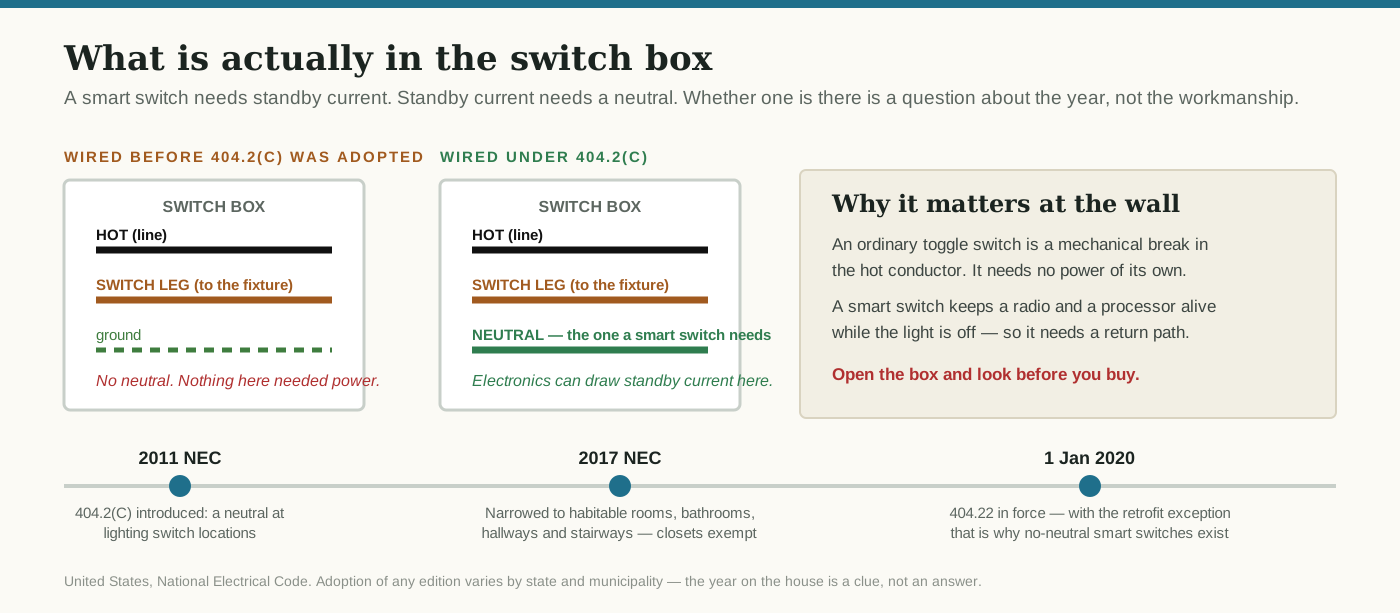
Most electronic switches need a small amount of standby current to keep their radio and processor alive while the light is off. That needs a neutral conductor in the box. In the United States, a grounded (neutral) conductor was only required at switch locations controlling lighting loads from the 2011 National Electrical Code onward, when Code-Making Panel 9 added section 404.2(C). Before that, a switch box very commonly contained nothing but the hot and the switch leg — because nothing in the box needed power when the light was off.
So if your house was wired to a code edition before your jurisdiction adopted the 2011 NEC, an absent neutral is not a defect and not bad work. It is what the rules asked for at the time.
The 2017 edition narrowed the requirement rather than widening it: a neutral is required at switch locations serving bathrooms, hallways, stairways, and rooms suitable for human habitation or occupancy. A closet light or a door-jamb switch is exempt, because nobody is going to fit an occupancy sensor there.
That same 2017 cycle added section 404.22, effective 1 January 2020, requiring listed electronic lighting control switches not to push current onto the equipment grounding conductor during normal operation — with an exception for retrofit switches installed where the neutral cannot be extended without tearing out finish materials. That exception is precisely why "no-neutral" smart switches exist and are sold legitimately. They are a retrofit accommodation, not the preferred design.
Open the box, look, and then buy. Adoption of any code edition varies by state and city, so the year on your house is a clue and not an answer.
Smart bulbs are the beginner's answer and usually the wrong default
This is the part the packaging will not say: for a ceiling fixture holding four bulbs, four smart bulbs cost more than one smart switch, fail more often, and fail worse. You have replaced one point of failure with four, and you have taken the wall switch away from everyone who visits.
Bulbs earn their place in lamps, in bedside fittings, in anything where you genuinely want per-bulb colour, and in rentals where the wiring is not yours to touch. That is a real list. It is a much shorter list than the shelf space suggests.
One hard rule while you are here: never put a smart bulb on a dimmer switch. The dimmer chops the waveform the bulb's own driver is trying to read, and the result is flicker, buzz, or a dead bulb. If the fixture is on a dimmer, the dimmer is the thing to replace.
Where a plug genuinely wins
Lamps, fans, holiday lights, a coffee machine, anything with a plug and a mechanical switch you can leave in the on position. No wiring, no landlord conversation, no permanent change, and the cheapest way to find out whether you actually want automation before spending on it.
Its limits are honest ones. It cannot help a hardwired ceiling light, and it inherits the lamp's own switch as a failure point.
Three-way circuits, briefly
One light, two switches. Standard smart switches will misbehave on this circuit — you need hardware that explicitly supports three-way, usually as a main switch plus a companion. Buying a single smart switch for one end of a three-way and hoping is the most common expensive mistake in this whole category.
| Situation | Sensible default | Why |
|---|---|---|
| Renting, table and floor lamps | Plug, or bulb | No wiring, fully reversible at move-out |
| Ceiling light, guests use the room | Switch | The wall keeps working for everyone |
| Colour or per-bulb scenes on a lamp | Bulb | The only option that does this |
| One light, two switches | Three-way-rated kit | Standard switches will not behave |
| No neutral in the box | No-neutral switch, or an electrician | Retrofit exception exists for exactly this |
What happens when a visitor walks in?
Run this test in one room before you buy for the whole house. A guest, a child, or a tired adult comes in and wants light. If the answer involves an app, an account, or an explanation, the setup has failed regardless of how well it works for you.
A switch passes because the wall still does what walls do. A plug passes if the lamp switch is left on and the plug is reachable. A bulb passes only in a house that has agreed never to touch that switch again.
Decide the ecosystem before the device, too — a bulb that only speaks to one assistant is a drawer ornament the day you change phones, and Matter certification is the cheapest insurance against that.
Then buy one. Live with it for a fortnight. The second purchase should be a decision, not a set.
If replacing the switch means opening a box you do not understand — no neutral, aluminium conductors, an unfamiliar arrangement, or a light that comes on when you flip a different switch — stop and pay an electrician for an hour. That is mains-voltage work behind a wall you cannot see into, which is the same reason to check what is behind the wall before drilling anywhere near it.