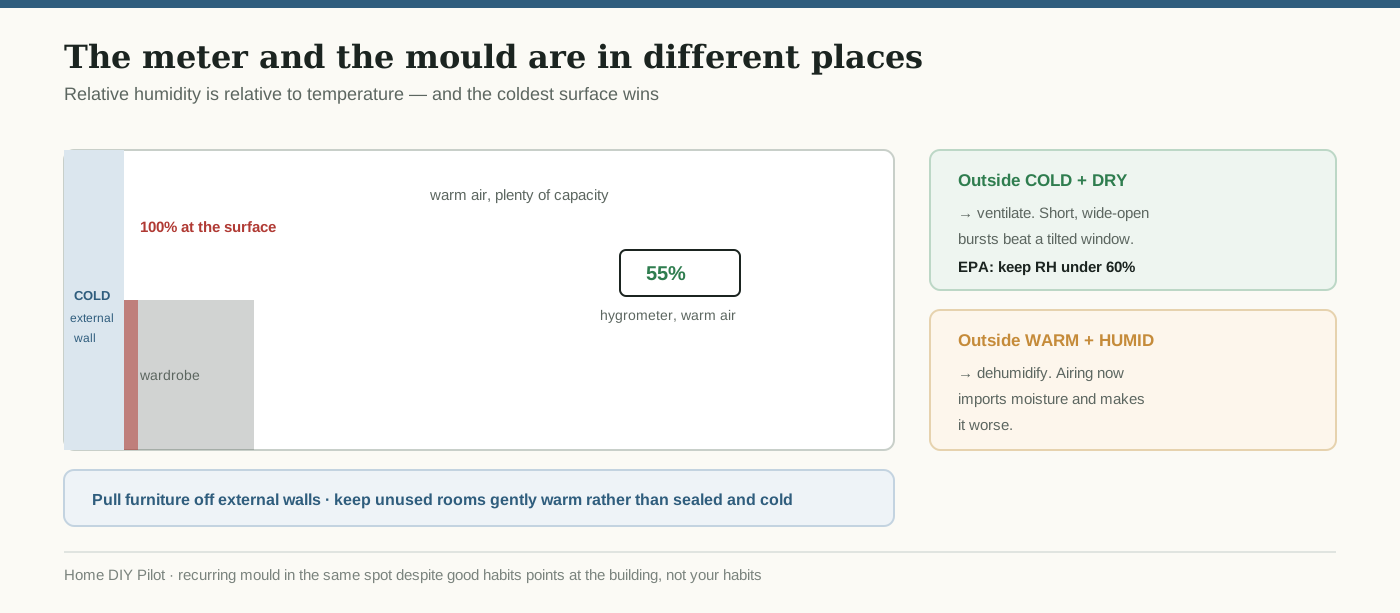
This is the complaint that makes people give up: the humidity reading is fine, the room does not feel damp, and there is black mould in the corner behind the furniture on the outside wall.
The reading is not wrong. It is just measuring the wrong place.
Relative humidity is relative to temperature
Warm air holds more moisture than cold air. That is the whole mechanism, and it has an awkward consequence.
Your hygrometer sits somewhere convenient — a shelf, a desk — in the warmest part of the room, and reports the humidity there. But the highest relative humidity in any room is always at its coldest surface. Building scientists call it the first condensing surface, because that is where condensation appears first: as air contacts it and cools, the same amount of water vapour represents a much higher relative humidity, and once it reaches 100% at that surface, water forms.
Which is why a room reading a comfortable 55% in the middle can be sitting at saturation in the corner where two external walls meet.
The furniture is part of the problem
Now add a wardrobe against that wall.
You have created a pocket of still air against the coldest surface in the room, cut off from the heated air circulating everywhere else. The surface behind it runs colder than the rest of the wall, and nothing moves the moist air away. That is not a coincidence of where mould appears — it is the explanation.
Pulling furniture a few centimetres off external walls, and leaving gaps at the ends of long units, does more for that corner than any amount of wiping.
The numbers worth holding on to
The EPA's guidance is to keep indoor relative humidity below 60%, and ideally between 30% and 50%. Mould germinates readily as you move above roughly 65%, and grows vigorously as you approach 80% at the surface.
Note the distinction that matters: those upper figures describe conditions at the surface, not on your shelf-mounted meter. If you want to know what your cold corner is doing, measure in the cold corner.
Ventilate or dehumidify? It depends on the weather
Here is the decision people get backwards, and it is genuinely counterintuitive.
When outdoor air is cold and dry — winter — ventilate. Cold air holds very little moisture. Bring it in, let it warm up, and its relative humidity plummets, giving it enormous capacity to absorb moisture from the room, which you then throw out at the next airing. Short and vigorous beats long and half-hearted: open windows wide for a few minutes, several times a day, rather than leaving one on the tilt for hours. The wide-open burst exchanges the air without stripping heat out of the walls and furniture; the permanently tilted window chills the reveal around it and can create a cold strip that grows its own mould.
When outdoor air is warm and humid — muggy summer weather — ventilating can make it worse. You are importing moisture. That is when a dehumidifier earns its cost, and when airing out a cool basement on a warm damp day is actively counterproductive.
So the rule is not "always ventilate." It is: compare outside with inside, and only bring in air that is drier than what you have.
Heat is part of moisture control
The instinct in an unheated spare room is to shut the door and save the money. It is the wrong instinct in a damp building.
A cold room has cold surfaces, and cold surfaces condense. Keeping a room reasonably and evenly warm raises surface temperatures, which lowers surface relative humidity, which is precisely what stops condensation. A modest continuous background heat generally beats letting a room go cold and blasting it occasionally.
The same logic applies to closing internal doors: if a cold room stays sealed off while a warm humid one vents into it whenever the door opens, you have designed a condensation trap.
What to do about mould that is already there
Small areas of surface mould on a non-porous surface can be cleaned — but treat cleaning as symptom management. If the moisture source stays, it comes back in the same spot, which is itself diagnostic.
Ventilate while you clean, protect your skin and airways, and do not dry-brush it, which puts spores into the air.
Then apply the honest test: is this a lifestyle-moisture problem — drying laundry indoors, long showers with no extraction, unventilated cooking — or a building problem? Recurring mould in the same place despite good habits, damp that rises or spreads, staining on ceilings, or a musty smell with no visible source points at the fabric of the building rather than at how you live in it. That is a landlord conversation or a surveyor's, not a bottle of spray.