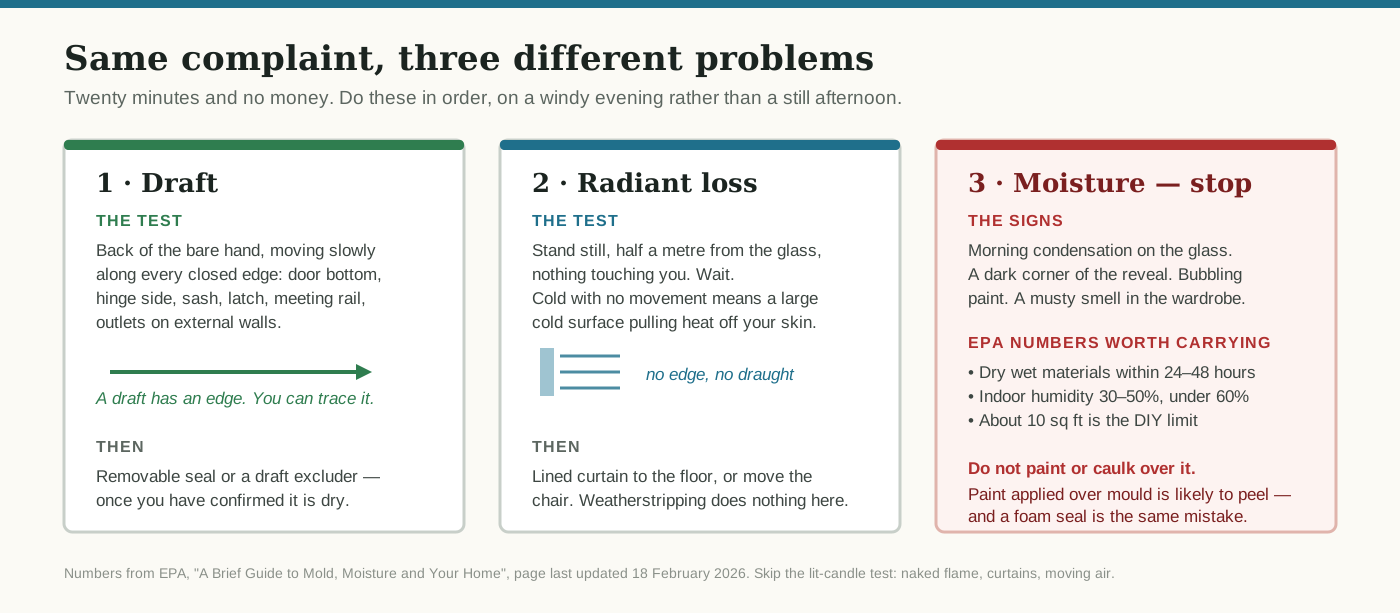
Three different problems produce the same complaint. The bedroom is cold, it is worse in the evening, and something should be done about it.
One of them is a draft — moving air, fixable with a few pounds of foam. One is a cold surface radiating heat away from you, where sealing the gaps changes nothing because there were no gaps. And one is moisture, where every product sold to fix the first two will make things worse.
Telling them apart takes twenty minutes and no money, and it is the entire job. The purchase afterwards is trivial.
The candle is a bad idea; your hand is better
Air movement is what you are testing for, and you can feel it. Work along the closed edges of a room with the back of your hand — bare skin, moving slowly, at the bottom of the door, up the hinge side, along the window sash, around the latch, at the meeting rail, and at the electrical outlets on external walls.
A draft feels like a line. It has an edge, and you can trace it.
Do this on a windy evening rather than a still afternoon; a leak that is undetectable in calm weather is obvious with pressure behind it. And skip the lit-candle trick you will see recommended everywhere. Naked flame near curtains and a draft is an unnecessary way to test something your hand already tells you.
Radiant cold has no edge
Now stand in the middle of the room, half a metre from the window, with nothing touching you, and stay there.
If you feel cold without feeling movement, that is radiant loss: a large cold surface — single glazing, an uninsulated external wall, an unheated flat above or below — pulling heat off your skin. Weatherstripping will not touch it. What helps is a heavy curtain that reaches the floor and closes at the top, or simply moving the chair.
This is the case people spend the most money misdiagnosing. Every seal in the catalogue, applied to a room whose problem is a cold pane of glass.
Now check for the thing that means stop
Before you seal anything, look for water.
Condensation on the inside of the glass in the morning. A dark patch at the bottom corner of the reveal. Paint bubbling on the wall next to the window. A musty smell in a wardrobe on an external wall. Any of those changes the job entirely, and the EPA is blunt about the order of operations: control the moisture first, because the mold cannot grow without it.
Two of their numbers are worth carrying around. Indoor relative humidity should sit below 60%, ideally between 30 and 50% — a hygrometer costs less than a draft excluder and settles the argument. And wet materials need to be dried within 24 to 48 hours of a leak or spill, after which mold growth becomes likely rather than avoidable.
The EPA also says, in as many words, not to paint or caulk a moldy surface: paint applied over mold is likely to peel. Sealing a damp reveal with foam tape is the same mistake with a different product. You are trapping the water against the wall and hiding the evidence from the person who could fix it.
Their rough DIY boundary is about ten square feet — roughly a three-foot square. Below that, cleaning it yourself with detergent and water is normal. Above it, or where the water came from sewage, or where you have health concerns, it is somebody else's job. Bleach is not recommended as a matter of routine, and killing mold is not enough on its own, because dead spores still cause reactions. It has to come out.
What the smart plug is actually for
Not this. A smart plug measures one plugged-in load, and the loads that make a flat cold are almost never plugged in.
It is genuinely useful for one thing: settling a specific argument about a specific appliance over a week. Is the oil heater in the spare room costing what you think? Put it on a metering plug, run the week, read the number. That is a real answer to a real question.
It is not an energy audit, it cannot see your heating, and a graph in an app is not a saving.
The note to your landlord is the actual deliverable
If the diagnosis lands on the building rather than on you — a window that no longer closes onto its seal, a hinge-side gap that reopens, condensation that returns every morning, a cold patch that maps to a wall — then the useful output of this whole exercise is four lines in writing.
Where it is. What you observed. Under what conditions. What you already checked.
"Bedroom window, left sash: cold air along the closing edge on windy evenings, latch fully engaged, condensation on the inside of the glass most mornings, no seal applied because of the moisture." That paragraph is worth more than anything you can buy, it creates a dated record, and it is the only route to a fix on a problem you are not allowed to solve.
Then, and only then, buy one thing
A draft excluder at the base of a door that has a visible gap. Removable foam on a door frame you have confirmed is dry. A lined curtain for a cold window. A hygrometer, before any of them.
Buy for the diagnosis you made, not for the discomfort you felt. The discomfort is the symptom. It is the same discipline that separates a rattling door caused by a strike plate from one caused by a sagging hinge — the door guide works the same way, and the two problems are neighbours more often than people expect.